Highlights from Executive Plenary Day One
World Nuclear Symposium: second day wrap up
The Symposium opened with the numbers behind nuclear's momentum – record output and record new build. The message from World Nuclear Association Director General Dr Sama Bilbao y León and Association Chairman Johan Svenningsson of Uniper was the same: the industry has the trust of governments and financiers, and now must deliver.
Opening the Symposium
The opening session of the Symposium featured a special keynote.
HE Faure Essozimna Gnassingbé, President of the Council of the Republic of Togo, presented Africa as a partner and a market with a mature vision for its own energy. The biggest barrier to deployment in Africa, he said, is financing. Togo’s proof of intent came in two announcements: Togo has signed the COP28 Declaration to Triple Nuclear Energy by 2050 and the country will host the third Nuclear Energy Innovation Summit for Africa in Lomé in June 2027.
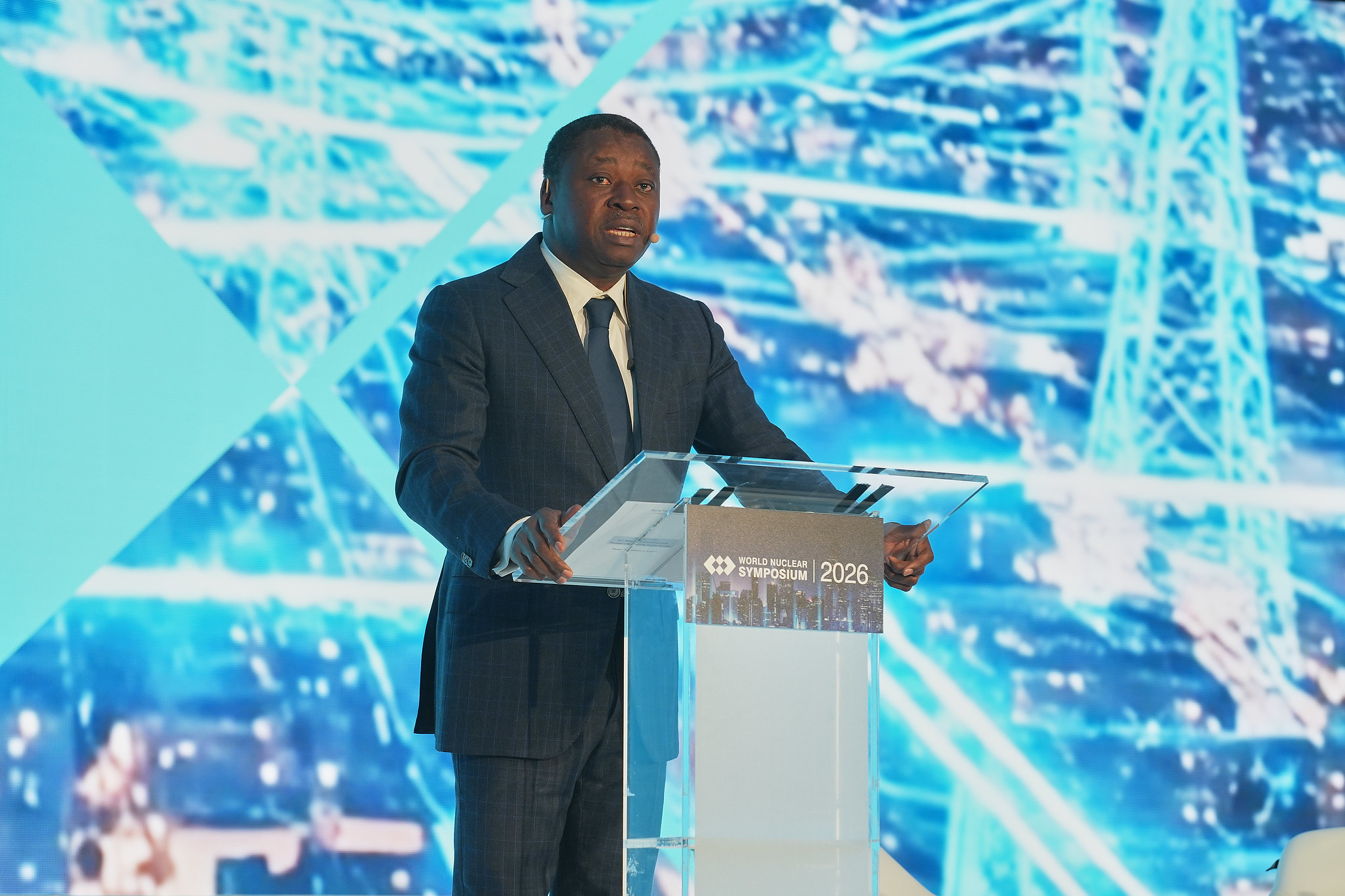
Caption: HE Faure Essozimna Gnassingbé, President of the Council of the Republic of Togo
Expanding the Global Frontiers for Nuclear
Arsenio Domínguez, Secretary General of the International Maritime Organization (IMO), explained how nuclear has become a main topic of conversation at the IMO as shipping pursues its strategy to reduce greenhouse gas emissions. Architect Lord Norman Foster argued that the world is entering an “age of electrical revolution” and made the case for industrialized small and micro-modular reactors coming off production lines to power cities, data centres and grid-free communities.
Key quotes:
- “This will only happen if we have the right people trained for this transition – and I'm speaking specifically of the seafarers.” Arsenio Domínguez, Secretary General, International Maritime Organization
- “Why are we not industrializing these units? Why are they not coming off a production line like a jet engine?” Lord Norman Foster, Founder and Executive Chairman, Foster + Partners
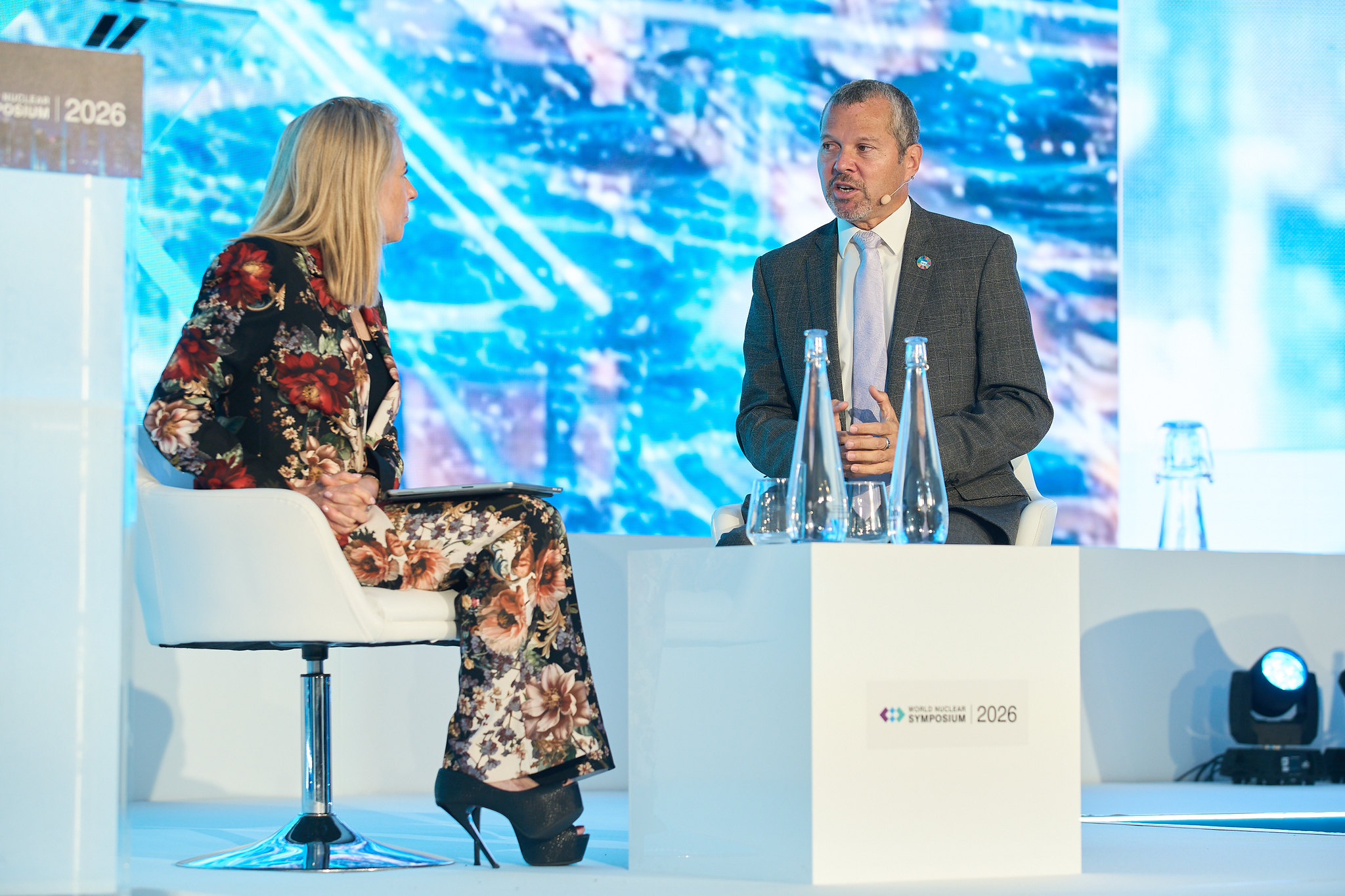
Caption: Dr Sama Bilbao y León, World Nuclear Association, and Arsenio Domínguez, Secretary General, International Maritime Organization.
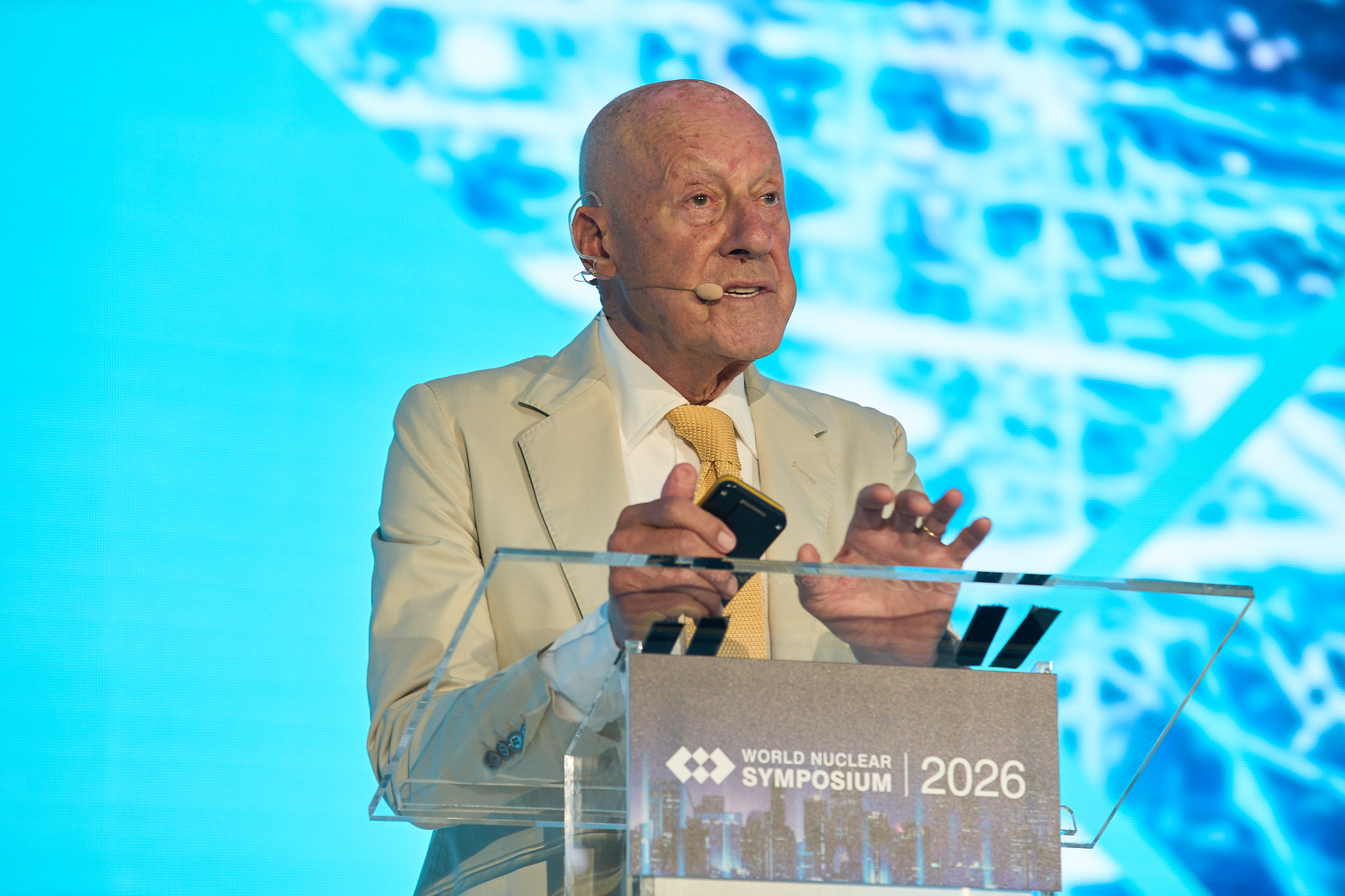
Caption: Lord Norman Foster, Founder and Executive Chairman, Foster + Partners
Set for Success
Leaders from EDF, Westinghouse, GE Vernova Hitachi, and Orano set out what is working across the value chain: the return of programme-scale building with standardized designs; policy and regulatory frameworks in France, the UK and Canada; construction under way on the first BWRX-300 at Darlington; AI applied across design, construction and the operating fleet; and fuel cycle capacity expansion. Asked what the industry still needs, the panel’s answer was execution, a durable demand signal to suppliers and talent, and a rational approach to safety.
Key quotes:
- “Is it the hyperscalers, is it AI? They're certainly accelerating the conversation… But they're not the only ones.” Nicole Holmes, Chief Commercial Officer, GE Vernova Hitachi
- “Team France is in action.” Nicolas Maes, Chief Executive Officer, Orano
Orano CEO's confident bet on Mongolian production
From Ambition to Megawatts: Delivering Nuclear at Fleet Scale
Ma Yuanhua, President of State Nuclear Power Technology Corporation, demonstrated the benefits of fleet-based construction. SNPTC is delivering projects reliably on a 5-year schedule with a first-time pass rate of about 95% for key processes.
Key quotes:
- “Fleet-based construction is the surest bridge from ambition to action.” Ma Yuanhua, President, State Nuclear Power Technology Corporation
Industrializing Nuclear Growth
Suppliers are gearing up for a 400 GWe build-out and keen to see indications of exactly which products will be demanded. Larsen & Toubro is spending $250 million to make India's turbine rotors at home; Curtiss-Wright is priming suppliers with small orders while preparing an $80 million expansion. The message to buyers was: given a visible pipeline of orders, the supply chain will respond.
The Cornerstone of Delivery: Workforce, Leadership and Capability for the Nuclear Scale-up
Moderated by Callum Thomas of Thomas Thor Associates, leaders from Framatome, Necsa and Women in Nuclear Global examined where the people will come from to deliver the tripling ambition, which Thomas framed as a cost and schedule problem rather than a hiring problem. Grégoire Ponchon set out how Framatome has kept hiring 2,500 people a year and grown to 22,000 staff on the strength of stable policy and visibility from governments; Melina Belinco argued that flexibility has become a workforce capability and that leaders must model it for policies to be used; and Loyiso Tyabashe of Necsa described how South Africa is building policy certainty, a university feeder pipeline and industry coordination so that skills follow its new build programme rather than leave the country.
Taking the System-Wide View
Dr Sama Bilbao y León, John Fingleton, Elsie Pule, Joe St. Julian and Mikal Bøe examined what coordination across governments, regulators and industry looks like in practice. Bilbao y León said successful countries treat nuclear as an economy-wide project, not an energy project, and called for a global mechanism to license once, review once and build many. Fingleton reported that the UK is committed to legislating the Nuclear Regulatory Taskforce's 47 recommendations, and made suggestions where its findings could be useful to other jurisdictions too. St. Julian explained how OEMs, suppliers, owners and financiers can cooperate ahead of demand; and Bøe set out CORE POWER's plan to turn nuclear from projects into products through floating plants and nuclear-powered shipping.
Key quotes:
- “Collaboration is learned through repetition. As we repeat, we get better at it.” Joe St. Julian, President, Nuclear, AtkinsRéalis
- “We were asked to report because there was a view that regulators were holding back economic growth. Yes, there were some problems. But there were bigger problems in government and policy with clarity, timeliness and quality of policy.” John Fingleton, Executive Chair, Fingleton