Highlights from World Nuclear Supply Chain 2026: Day Two
World Nuclear Supply Chain 2026: Day Two
Day Two moved from the demand signal discussions of Day One to mobilization.
Sessions covered what governments, financiers and suppliers must do to turn ambition into delivery. Rosatom’s Dmitry Raspopin also discussed the recent power purchase agreement signed on 16 October to supply North Maluku in eastern Indonesia from two 100 MWe floating nuclear power units – the first export agreement of its kind.
Deployment Mobilisation: Turning Ambition into Delivery
Dr Sama Bilbao y León opened Day Two by recapping the previous day’s demand signal and setting the day’s theme of moving from signal to mobilization. Undersecretary Mario Marasigan outlined the Philippines’ groundwork in establishing an independent regulator, to support meeting the target of 1200 MWe of nuclear by 2032. He named regulatory readiness, workforce development and grid interconnection across the archipelago as key priorities, and called on technology providers, financiers, government and Filipino industry to help.
Key quotes:
- “Please help us develop our capabilities and we would be glad to share it with our neighbours.” Hon. Mario C. Marasigan, Undersecretary, Department of Energy, Republic of the Philippines
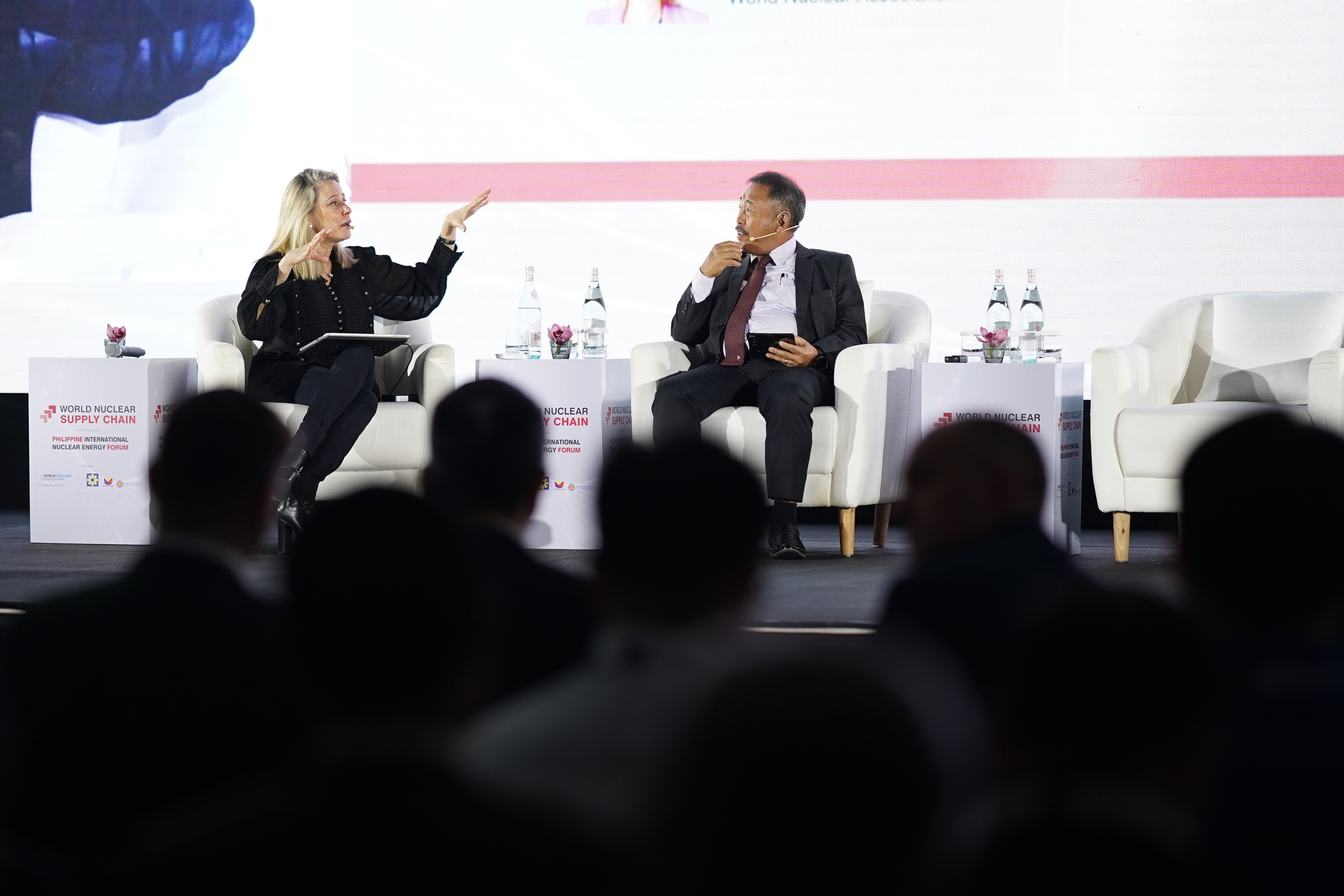
Caption: “Deployment Mobilisation: Turning Ambition into Delivery” from World Nuclear Supply Chain 2026: Dr Sama Bilbao y León and Hon. Mario C. Marasigan, Undersecretary, Department of Energy, Republic of the Philippines
Delivering Sector Growth: What Top-Performing Projects Do Differently
Dr Sama Bilbao y León chaired a panel with Mark Lunn (Amentum), Ricardo Moreno Escudero (Empresarios Agrupados – GHESA) and Jack Haberman (Leighton Asia) discussing how much of a project’s performance is decided before construction begins. Speakers set out the factors behind strong performance, from defining the business case and delivery model early and building the reference plant without modification, to engineering’s shift towards an integrator role. They also drew lessons from hyperscale data centre construction in Southeast Asia, where early contractor involvement, off-site modular manufacturing and collaborative contracting have delivered facilities in 12-18 months.
Key quotes:
- “We’re not playing chess anymore with our clients. It’s open, it’s collaboration.” Jack Haberman, Operations Manager, Leighton
- “Nobody is going to be successful alone. This is a collective effort.” Ricardo Moreno Escudero, Business Development VP, Commercial Director, and Deputy Director Nuclear Engineering Services, Empresarios Agrupados - GHESA
- “If you’re buying a reference plant, buy the reference plant. Don’t build your local variant.” Mark Lunn, Chief Engineer, International Energy Programmes, Amentum
Derisking Nuclear Deployment Through International Collaboration
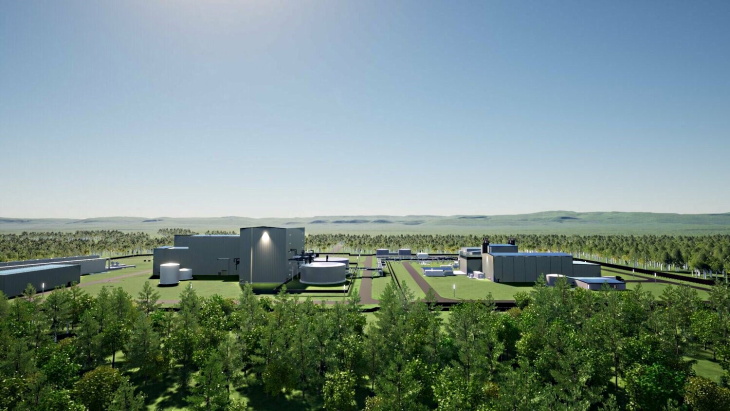 TerraPower selects more suppliers for Natrium components
Moderated by King Lee, the panel brought together a reactor developer, a manufacturer and an engineering consultancy to explore how international partnerships can take the risk out of new nuclear. TerraPower’s Jeff Miller described building “America’s next reactor” – the Natrium plant at Kemmerer, Wyoming – with a multinational supply chain, early dialogue with the regulator that sped up its construction permit, and a ten-year HALEU supply contract with first deliveries due in 2028. Masanori Ijichi explained how IHI is investing in manufacturing capacity two to three years ahead of firm demand, while Carlos Leipner of Sargent & Lundy pointed to shared regulatory templates, regional training centres and supplier mapping as opportunities for Southeast Asia to work together.
Key quotes:
- “I’m not sitting on this stage telling you it’s easy. It’s actually quite difficult to bring new nuclear to the market.” Jeffrey Miller, Senior Vice President of Business Development, TerraPower
- “Starting too early is a risk, and waiting too long is also a risk.” Masanori Ijichi, Division Director of Nuclear Power Plant Project Center, IHI Corporation
- “You will not get cost and schedule to be credible until you have your supply chain robust.” Carlos Leipner, Senior Energy Executive, Sargent & Lundy
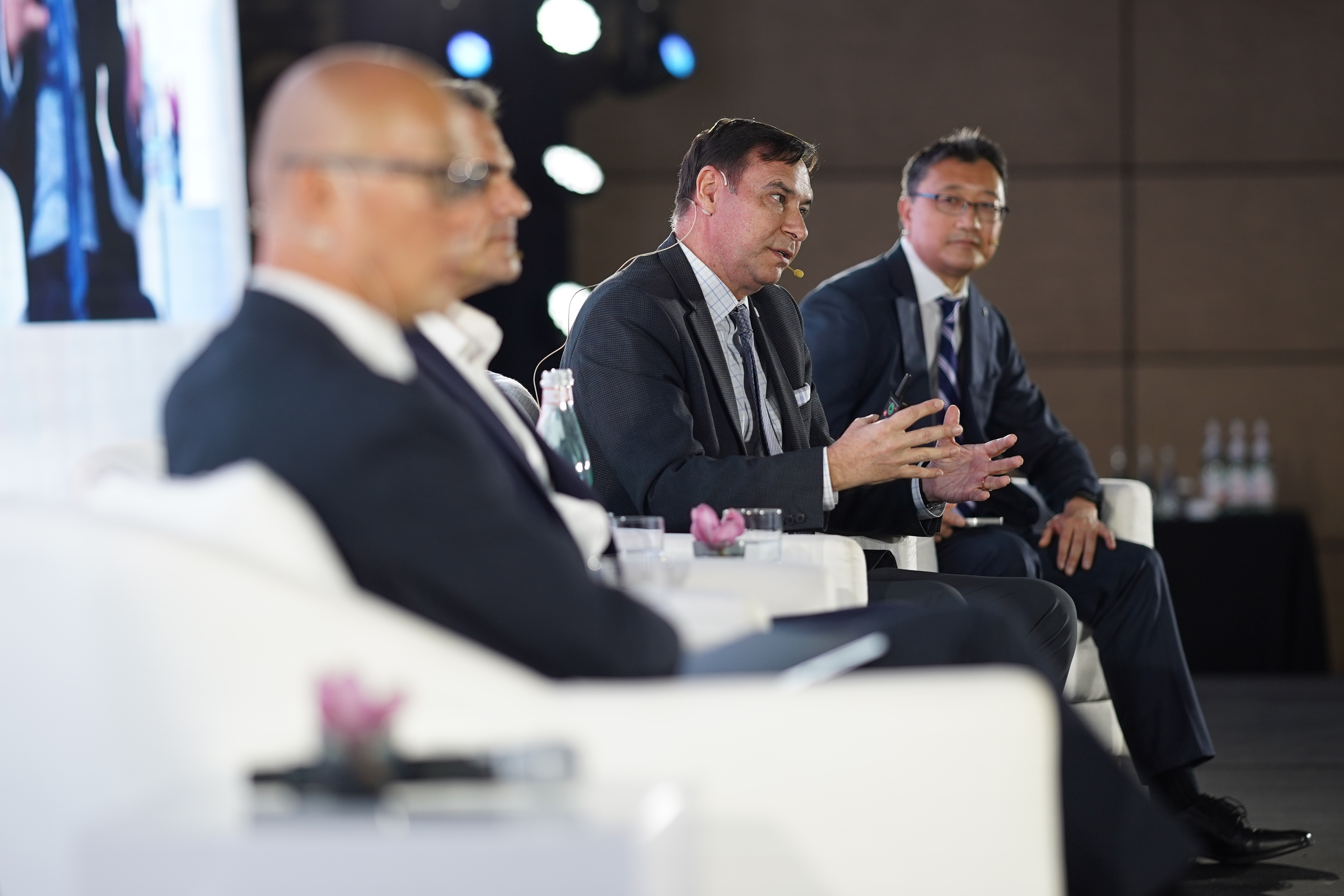
Caption: From World Nuclear Supply Chain 2026: “You will not get cost and schedule to be credible until you have your supply chain robust.” Carlos Leipner, Senior Energy Executive, Sargent & Lundy
Supplier Strategies for Global Nuclear Markets
Moderated by Nathan Paterson, the panel looked at how suppliers decide where to compete, how they build partnerships with host-country companies and what it takes to invest in capacity ahead of firm orders. Adrian Davies of Candu Energy described how successive supply chain shocks inform how companies now map supply chains and demand plans out to 2070 and ask suppliers to price for fleets rather than single projects. Andy Fry of GE Vernova Hitachi Nuclear Energy said the four-unit BWRX-300 programme at Darlington marks a shift from one-off builds to series production, with dual sourcing in North America and Europe, around 55% of each project’s value delivered locally, and suppliers reserving capacity ahead of formal orders. Nik Nor Zafirah Yusoff Affendi of PwC Malaysia urged Malaysian companies with oil and gas, power and heavy construction experience to map their capabilities, upgrade to nuclear quality standards such as ASME and NQA-1 and win reference work abroad. Ultimately, speakers all agreed that localization should build lasting internationally competitive capability.
Key quotes:
- “Localization is not a short-term journey… it’s trying to create a marriage rather than just a one-off partnership.” Adrian Davies, Vice President, Supply Chain Management, Candu Energy Inc., an AtkinsRéalis Company
- “Localization should be used with the intent to eventually build internationally competitive companies in your own countries.” Nik Nor Zafirah Yusoff Affendi, Senior Manager, Capital Projects and Infrastructure, PwC Malaysia
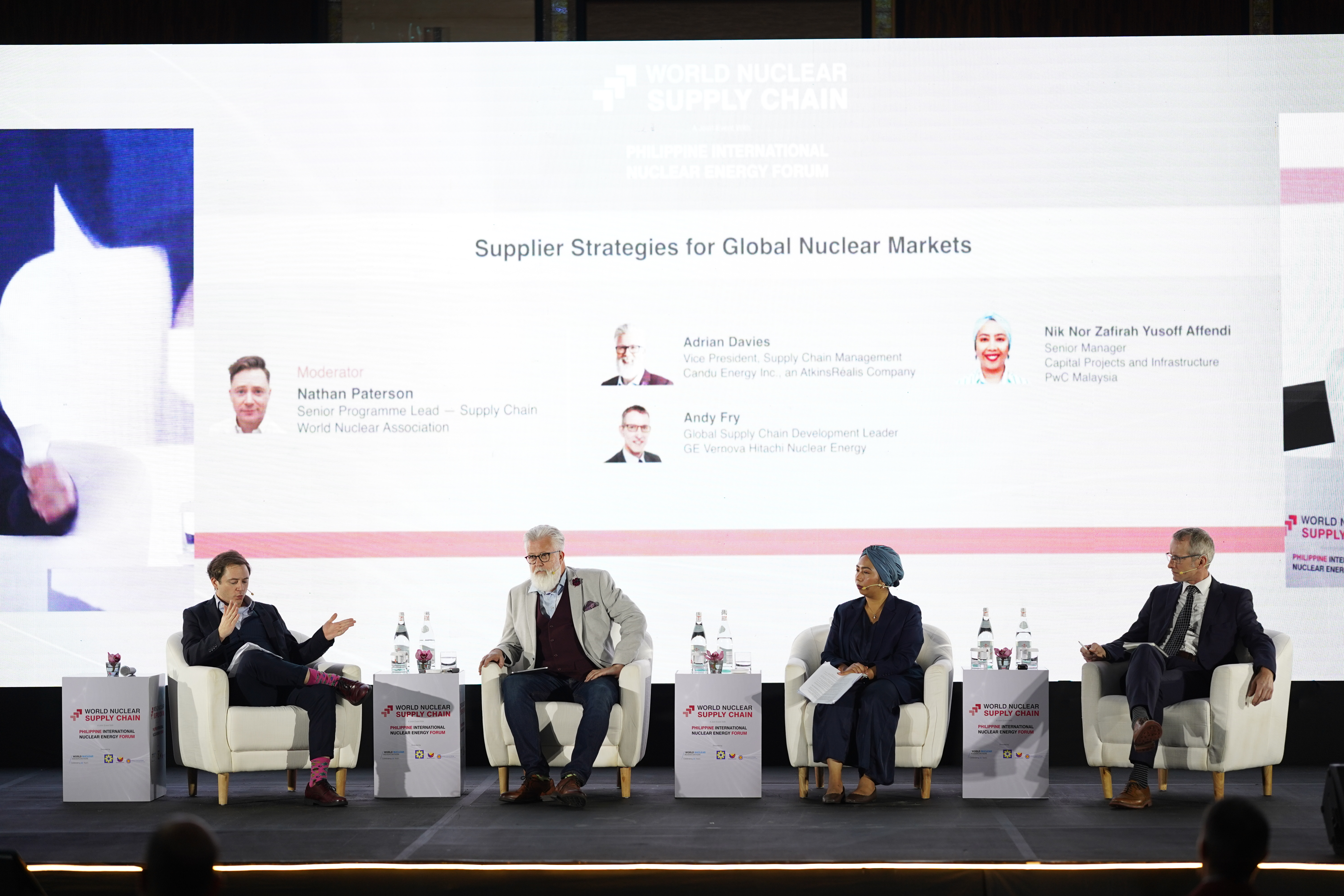
Caption: From World Nuclear Supply Chain 2026: Nathan Paterson moderates the panel “Supplier Strategies for Global Nuclear Markets”
Nuclear Afloat: Floating Power for Island and Coastal Markets
In a spotlight session moderated by King Lee, Dmitry Raspopin of Rosatom presented floating nuclear power plants as a shipyard-built option for island grids, remote industry and coastal communities. He drew on the experience of the Akademik Lomonosov, which has supplied power and heat to Pevek in Russia’s Arctic Chukotka region since 2020, and described Rosatom’s RITM-200-based units: 100 MWe each, with a 60-year design life and refuelling every seven to ten years carried out in Russia, while a replacement unit is towed in to keep the power flowing. He also outlined the power purchase agreement signed on 16 October to supply North Maluku in eastern Indonesia from two 100 MWe floating units through a private industrial partner, with the first unit expected in around five years, and explained that the units are designed and licensed under Russian nuclear and maritime regulation.
Key quotes:
- “FPU today is the fastest way to get to the nuclear club, to access nuclear energy and to ensure energy security for decades to come.” Dmitry Raspopin, Director, ROSATOM Vietnam
 Rosatom signs floating nuclear power deal for Indonesia
Financing Nuclear Projects
 Podcast: Why is the World Nuclear Investment Guide needed?
King Lee moderated the session with representatives from the Asian Development Bank, World Bank and Hunton Andrews Kurth law firm, discussing how to finance nuclear new build given high capital costs, construction risk and the need for appropriate revenue models. The panel considered how risks should be allocated, de-risking structures such as blended finance, sovereign guarantees, export credit and insurance, and the role of development banks alongside the emerging role of private capital. Speakers also explored whether smaller units and phased commitment lower the financing barrier or simply redistribute the same risk, and whether an aggregated, multi-programme order book could make it possible to finance the factory, not just the plant.
Key quotes:
- “The greatest bottleneck that we see to nuclear development right now is readiness. There are not many countries that have projects that are ready to finance.” Bipul Singh, Philippines Energy Program Coordinator, East Asia and Pacific Region, World Bank Group
- “Nuclear development is a marriage. Sometimes you feel happy, but there are plenty of pains – and even if you are feeling pain, you have to maintain commitment.” Shigeru Yamamura, Director, Southeast Asia and the Pacific (SEAP), Energy Sector Office, Asian Development Bank
Manufacturing Readiness for the Nuclear Pipeline
Drawing on the World Nuclear Supply Chain Report’s outlook for the global project pipeline and demand for major nuclear equipment, speakers discussed where manufacturing capacity is most constrained against projected demand, and the opportunities that new build and lifetime extension offer suppliers. The panel looked at what it takes to engage successfully in the international nuclear market, how mid-tier manufacturers can scale up through qualification, quality and investment, and how collaborative efforts such as World Nuclear Association’s new Manufacturing Sub-Group can help companies act together to strengthen and expand a resilient supply chain.
Key quotes:
- “You can’t switch on manufacturing capacity when the purchase order arrives.” Stefan Wingerath, VP Nuclear, Velan
- “The ultimate goal should be to qualify, certify once and deliver many times.” Ramon Gasull, Sales Director, TÜV SÜD
From Projects to Programmes: Nuclear Industrial Strategies
Nathan Paterson moderated discussion of delivery models for scaling nuclear. Moving from one-off projects to programmatic, multi-unit deployment, and fleet approaches built on standardization, modularization can improve cost effectiveness. The session covered integrated delivery teams that align owner, vendor, EPC contractor and constructors through collaborative contracting and shared risk; realistic baselines grounded in design-for-manufacture maturity, benchmarking and integrated scheduling; and the business and policy environment needed to keep the sector resilient as construction and supply chain delivery ramp up across the programme lifecycle.
Key quotes:
- “A strategic plan is important, it needs to last for a long time… you want to have that stability, that leadership where government supports the industry with long term planning.” George Borovas, Partner, Hunton Andrews Kurth
- “We have to think about things as a programme… It is about investing at scale as a sustainable supply chain.” Andy Fry, Global Supply Chain Development Leader, GE Vernova
- “Somebody said it yesterday too… but we need to move quickly from power point to power plant.” Jeremy Stain, Director of Nuclear, Arup
Conference Reflections and Closing Remarks
Closing the conference, Dr Sama Bilbao y León and Hon. Sharon Garin, Secretary, Department of Energy, Republic of the Philippines remarked on a successful event that brought new connections and commitments between the global nuclear supply chain to the Philippines during its year as the ASEAN regional Chair. Reflecting on the discussions of the past two days, the next steps for the Association’s supply chain work in the region is clear with nuclear ambition growing in the region. They both thanked speakers, partners and delegates and invited attendees to register their interest in World Nuclear Supply Chain 2027 in Stockholm.
Key quotes:
- “For the Philippines this engagement comes at an important time for implementation of our nuclear power programme.” Hon. Sharon Garin, Secretary, Department of Energy, Republic of the Philippines
- “Let’s turn ambition into action, together. There is perhaps nowhere more appropriate to say that than here in ASEAN. Nearly 25% of the nuclear ambition among newcomer countries globally is right here in this region.” Dr Sama Bilbao y León, Director General, World Nuclear Association
World Nuclear Supply Chain 2027
World Nuclear Supply Chain Conference 2027 will take place 15-16 June in Stockholm, Sweden. Register your interest today at world-nuclear.org/events/1033/register-your-interest-for-2027