World Nuclear Association Brings Industry Perspective to IAEA 70th General Conference
World Nuclear Association represented the global nuclear industry at the IAEA's 70th General Conference (GC70) in Vienna, bringing the perspective of our members to discussions on fuel supply, the nuclear workforce, radioactive materials transport, advanced nuclear technologies and financing.
Across the week, World Nuclear Association contributed to high-level discussions, organised side events and meetings with member state delegations, international stakeholders, highlighting the practical conditions needed to support the continued growth of nuclear energy around the world.
From Ambition to Action
The discussions at GC70 reflected a nuclear sector entering a period of significant growth. For countries already committed to expanding nuclear energy, the focus is increasingly on structuring projects to reach final investment decision, and building the infrastructure and capabilities needed for project delivery.
For countries considering or developing new nuclear programmes, discussions centred on the benefits of nuclear energy for energy security, economic development and decarbonisation, alongside the institutions, skills and regulatory frameworks needed for successful deployment.
World Nuclear Association's engagement at GC70 focused on these practical challenges, bringing industry experience to discussions with governments, regulators, international organisations and other stakeholders.
Securing the Uranium Needed for Nuclear Growth
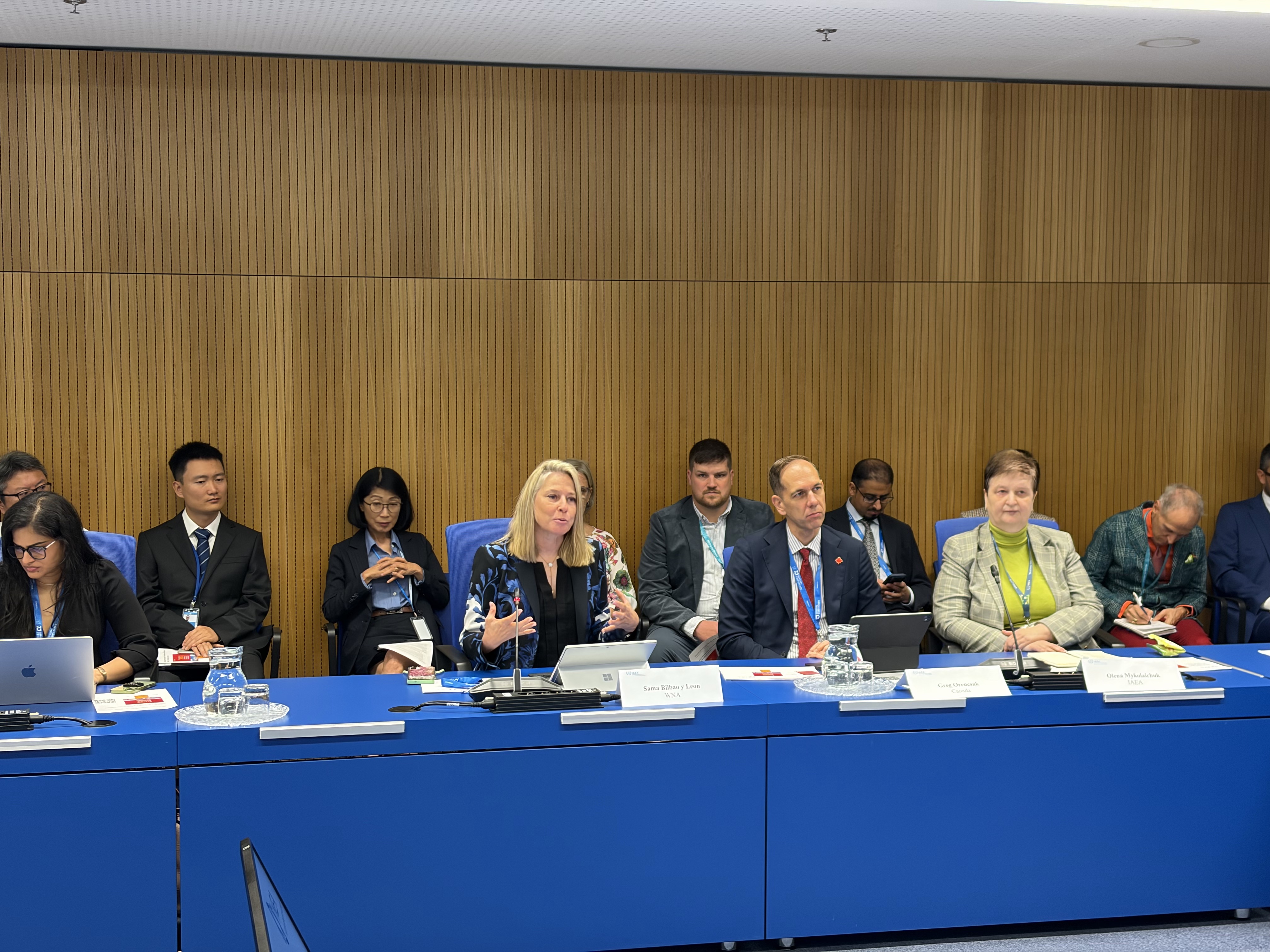
Director General, Dr Sama Bilbao y León provided opening remarks at the launch of the 2026 Uranium Resources, Production and Demand report, known as the Red Book. Published jointly by the OECD Nuclear Energy Agency and the IAEA, the Red Book is a leading global reference on uranium resources, production and demand. Its 31st edition assesses current resources and production alongside future supply and demand.
The latest assessment gives confidence that identified uranium resources are sufficient to support nuclear growth through 2050 and beyond, while highlighting the long lead times involved in developing new supply. Global uranium exploration and development expenditure reached approximately US$1.8 billion in 2023–24, a 46% increase on the previous reporting period, and total identified recoverable uranium resources rose 2.1% to around 8.1 million tonnes.
Sama highlighted the resurgence of activity across the uranium industry — increased exploration, the return of dormant projects, mine-life extensions and new production capacity — but stressed that resources in the ground do not automatically translate into supply. New projects must progress through exploration, permitting, financing and development, with some potentially taking 20 years or more from discovery to production.
"This is not simply a story of uranium production. It is a story of confidence – confidence that the nuclear industry will continue to expand, confidence that the fuel cycle can evolve to meet that growth, and confidence that industry, governments and international organisations will continue to work together to ensure the secure supply of the fuel that underpins abundant, clean, reliable nuclear energy."
— Dr Sama Bilbao y León, Director General, World Nuclear Association
Dr Kaajal Desai, our Senior Programme Lead for Fuel Cycle, joined the Red Book industry panel alongside representatives from Cameco and Orano, highlighting the importance of investment, efficient licensing and permitting, and cooperation across the fuel cycle as conversion, enrichment and fabrication capacities grow alongside uranium production.
Building the Workforce for Nuclear Growth
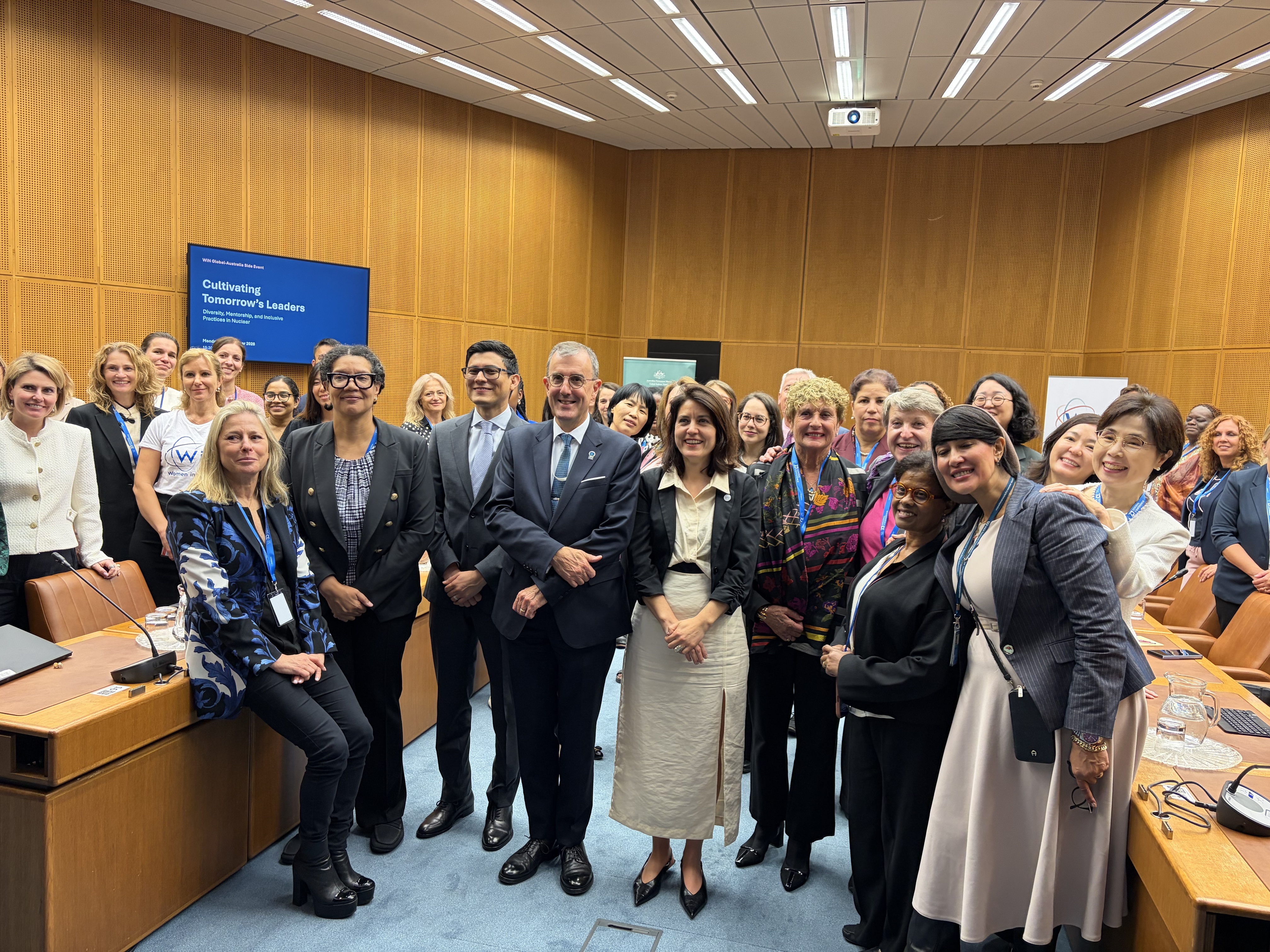
People and leadership were another important focus at GC70. Dr Sama Bilbao y León contributed to the WiN Global and Australia event Cultivating Tomorrow's Leaders: Plurality, Mentorship, and Inclusive Practices in Nuclear, which brought together leaders from industry, government and international organisations to discuss how the sector can develop the workforce needed for future growth.
The discussion highlighted that expanding nuclear capacity requires investment not only in reactors and infrastructure, but in the people and institutions needed to deliver and operate them. The future nuclear workforce will extend beyond traditional technical roles, with growing demand for expertise in regulation, law, environmental protection, communications, public policy, diplomacy and stakeholder engagement.
Mentorship and knowledge exchange were recurring themes. Sama encouraged a mindset shift from considering knowledge as something handed down to knowledge as something co-created, by creating the environment where knowledge is continuously exchanged, challenged, and enriched.
"Knowledge transfer preserves the past, but knowledge exchange helps us all to actually build the future."
—Dr Sama Bilbao y León, Director General, World Nuclear Association
A joint Nuvia and WiN Global initiative, New WING, was announced at the event — a three-year programme running from 2027–2030 to support female professionals in developing leadership and decision-making experience.

Supporting the Next Generation of Nuclear Technologies
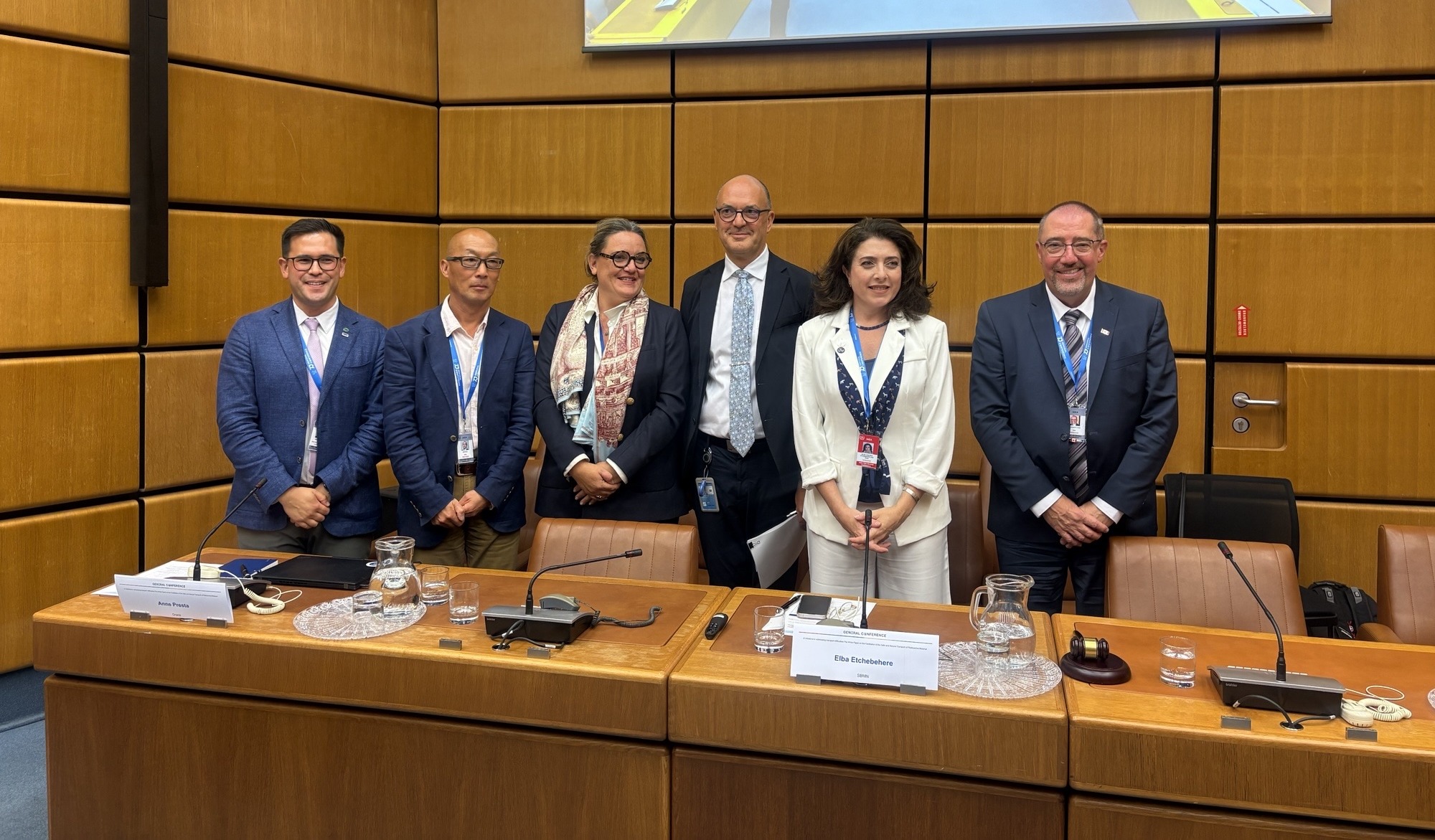
A side event on the White Paper on the Facilitation of the Safe and Secure Transport of Radioactive Material was co-organised by Canada, France, Switzerland, the United Kingdom, the World Nuclear Association and the World Nuclear Transport Institute, in cooperation with the IAEA. The event highlighted ongoing efforts to tackle the persistent challenge of shipment denials and delays and marked an important milestone in the work of the IAEA's Denial of Shipment Working Group. Over the past three years, the Working Group has brought together representatives from 30 Member States, international organisations and industry to develop practical recommendations and mitigation measures that reduce denials and delays while maintaining the highest standards of safety and security.
King Lee provided industry remarks, highlighting the importance of cooperation between Member States, regulators, international organisations and industry. Out of the seven recommendations of the white paper, the industry identified three immediate priorities: maintaining political commitment through a Joint Statement, strengthening the network of National Focal Points, and continuing communication and training.
"The facilitation of transport of nuclear material remains important for the efficient operation of the nuclear energy sector now but is vital for the future of the nuclear industry."
— King Lee, Head of Policy and Industry Engagement, World Nuclear Association
Making Radioactive Materials Transport Easier
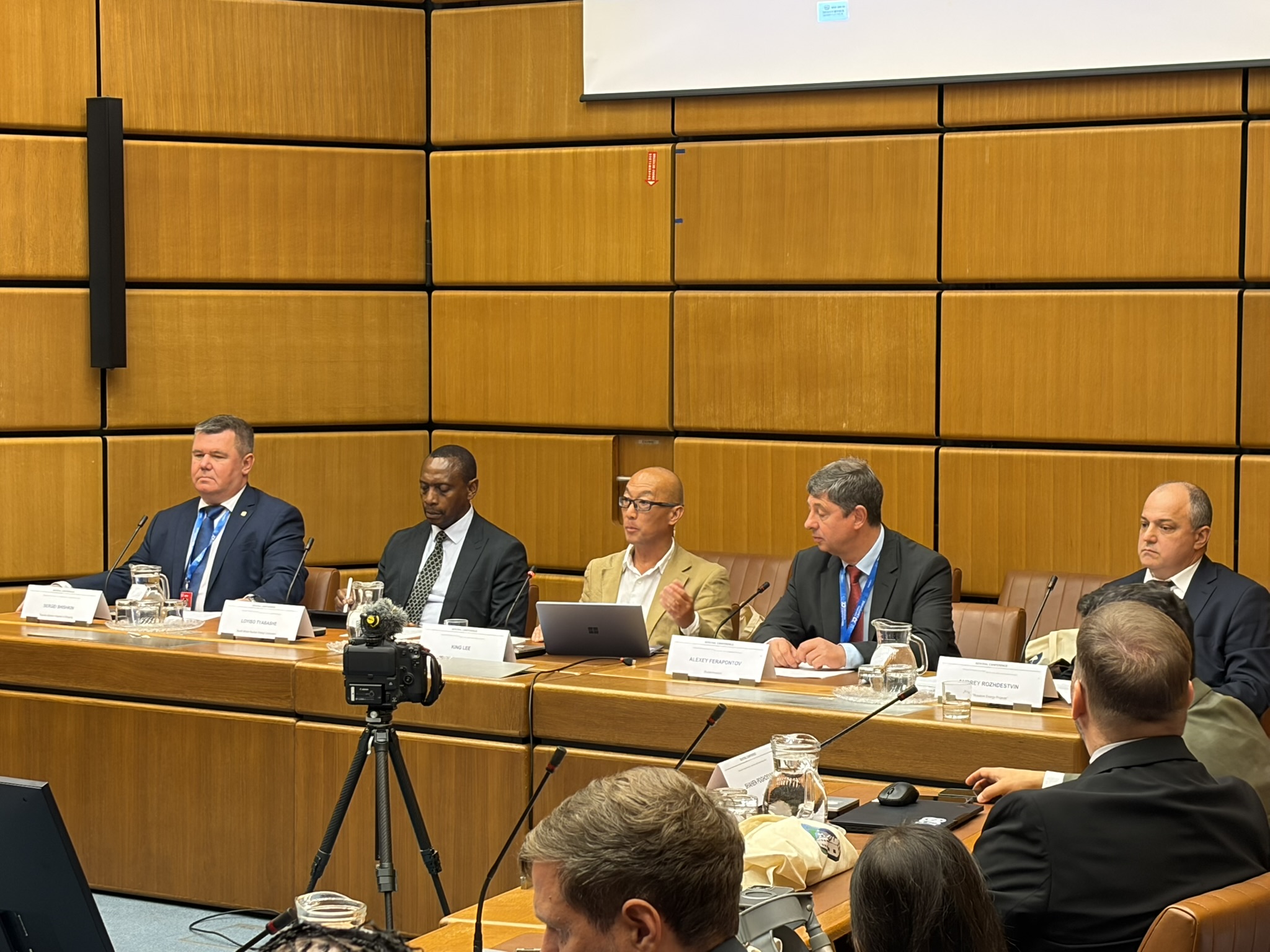
A side event on the White Paper on the Facilitation of the Safe and Secure Transport of Radioactive Material was co-organised by Canada, France, Switzerland, the United Kingdom, World Nuclear Association and World Nuclear Transport Institute, in cooperation with the IAEA. The event reflects the World Nuclear Association’s continued efforts to address the persistent challenges of denial and delay of shipments. The event marked a further step in the work of the IAEA’s Denial of Shipment Working Group, which has brought together representatives from 30 Member States, international organisations and industry over approximately three years, and whose White Paper sets out recommendations and mitigation measures for reducing denials and delays while maintaining safety and security.
King Lee provided industry remarks, highlighting the importance of cooperation between Member States, regulators, international organisations and industry. Out of the seven recommendations of the white paper, the industry identified three immediate priorities: maintaining political commitment through a Joint Statement, strengthening the network of national focal points, and continuing communication and training.
"The facilitation of transport of nuclear material remains important for the efficient operation of the nuclear energy sector now, but is vital for the future of the nuclear industry."
— King Lee, Head of Policy and Industry Engagement, World Nuclear Association
IAEA Director General Rafael Mariano Grossi underlined why the issue matters: shipment delays are "subtle but extremely negative things that continue to happen," and addressing them is ultimately about how the sector coordinates itself to reduce, and where possible eliminate, denials and delays. The next phase will focus on maintaining momentum and translating the White Paper's recommendations into practical action as the current Working Group approaches the conclusion of its mandate in December 2026
The delay and denial of shipments is a key focus area for the Association's Transport Working Group, which works collaboratively with industry stakeholders to identify challenges, develop solutions, and advocate for improvements in transport practices and policies.
For further information, or to get involved, please contact Allarakha Vora, Programme Lead – Transport & Waste.
Unlocking Finance for New Nuclear
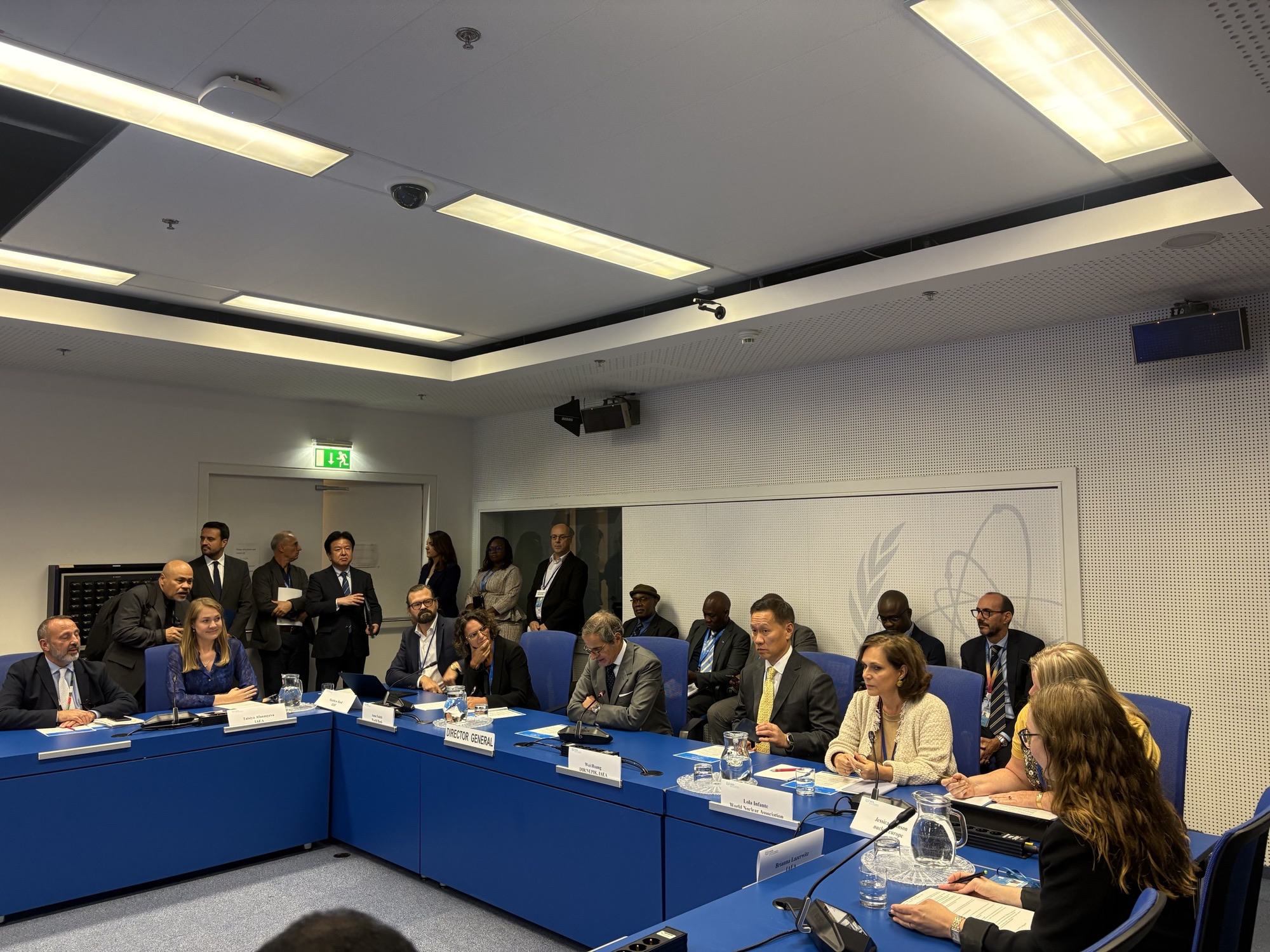
Dr Lola Infante, our Senior Programme Lead for Economics and Finance, contributed to the side event Expanding Financing Pathways for Nuclear Energy Projects, alongside the IAEA, World Bank, EDF and nucleareurope. The discussion explored how public and private capital can be mobilised for new nuclear projects, and how the nuclear and financial sectors can build a better shared understanding of risk, returns and project structures — including multilateral development bank support, government guarantees, revenue-support mechanisms, green bonds, sustainable finance, corporate investment and blended financing structures.
A recurring theme was the importance of considering financing from the earliest stages of project development. Clear revenue models, appropriate risk allocation, predictable policy frameworks and strong project execution capabilities can all improve bankability.
This session connected directly with our World Nuclear Investment Guide, a toolkit launched earlier this year to help bridge the structural gap between the nuclear and financial communities, providing practical information on investment readiness, financing models, nuclear-specific risks and the pathway towards mainstream finance.
"The challenge is not a lack of capital. The challenge is making nuclear investable at the scale required. Nuclear must move from a series of bespoke, government-supported projects to a mainstream infrastructure asset class capable of attracting large pools of private and institutional capital."
— Lola Infante, Senior Programme Lead, Economics and Finance, World Nuclear Association
Meeting governments' ambitions to at least triple global nuclear capacity by 2050 would require approximately $6 trillion in cumulative investment, equivalent to more than $250 billion per year on average.
Representing the Industry in Vienna
Beyond our formal programme, we held six stakeholder meetings alongside the General Conference — with ABDAN, Kingdom of Saudi Arabia, China, Indonesia and Australia, and Malaysia — exploring the practical conditions needed to support nuclear expansion.
Across these engagements, a common thread emerged: nuclear expansion cannot be delivered by governments or industry acting alone. Governments have an important role in establishing long-term policy certainty, supportive regulatory and market frameworks and, where appropriate, financing mechanisms and guarantees. Industry must develop projects, strengthen supply chains and workforce capacity, and engage policymakers and regulators early. International organisations, in turn, provide an important platform for cooperation, technical expertise and the development of common approaches across national borders.
World Nuclear Association’s stand also provided an opportunity to engage directly with delegates throughout the General Conference. Visitors showed strong interest in WNA’s practical resources, including our Talking Points booklet, World Nuclear Outlook Report 2026 and World Nuclear Investment Guide. These resources supported conversations around the scale of nuclear growth, the policy and market conditions needed to enable it, and the investment pathways required to turn ambition into new nuclear projects.
Three Lessons from GC70
The nuclear conversation is moving from ambition to delivery. There is growing momentum behind nuclear expansion, but achieving that growth will require concrete progress across the entire nuclear ecosystem, from existing fleet operation and new build to fuel, finance, regulation, transport, supply chains and workforce.
The ecosystem needs to grow alongside nuclear capacity. The Red Book demonstrates that substantial uranium resources exist, but resources need to be converted into nuclear fuel. The same principle applies across the wider sector: financing mechanisms, supply chains, skills, regulatory capacity and transport infrastructure need to develop alongside nuclear capacity if they are not to become constraints on growth.
Cooperation is critical to delivery. Many of the challenges identified at GC70 cross national and institutional boundaries. Securing fuel supplies, facilitating the transport of radioactive materials , financing projects, developing the workforce and deploying new technologies all require cooperation between governments, regulators, industry and international organisations.
Looking Ahead
At the IAEA's 70th General Conference, World Nuclear Association reinforced a clear message: nuclear expansion depends on effective international cooperation. Across the week's discussions, attention focused not only on the sector's growing momentum, but also on the concrete steps required to translate ambition into delivery, including fuel security, workforce development, transport resilience, technological innovation and investment mobilisation.