Following the March 2011 tsunami and subsequent accident at the Fukushima Daiichi plant, all reactors in Japan have had to get regulatory approval to restart.
In December 2022 the government adopted a policy of maximizing the use of existing reactors by restarting as many of them as possible, whilst also developing advanced reactors to replace those that are shut down. Since then, four units have restarted – Takahama 1 (August 2023), Takahama 2 (September 2023), Onagawa 2 (October 2024) and Shimane 2 (December 2024). Further units are expected to return to service in 2025.
In April 2025 the Nuclear Regulatory Agency (NRA) approved a draft report that concluded Tomari 3 meets new regulatory standards, a prerequisite for its restart. In June 2025 Tepco announced that it had begun loading fuel in Kashiwazaki-Kariwa 6. Fuel loading at unit 7 took place in 2024, but it has not yet restarted.
Earlier in February 2025 Japan’s latest Basic Energy Plan outlined the country’s aim to "make maximum use of nuclear power,” with about 20% of the country's total electricity generation in fiscal year 2040 to come from nuclear.
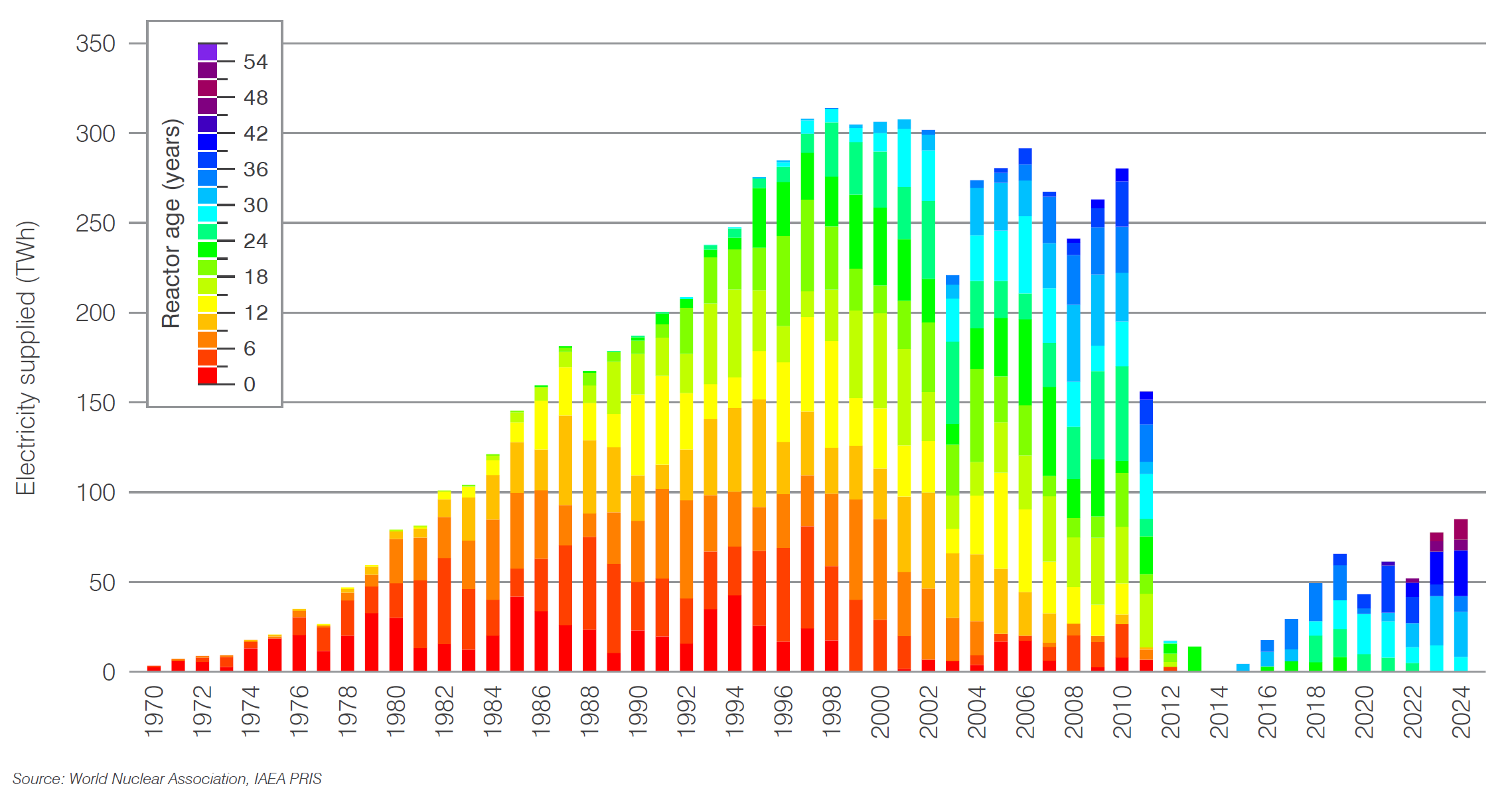
Nuclear electricity generation by age of reactor