Members convene in Monaco to set the course of Working Groups action plans
April 2026 Working Group meetings brought together members from across the global nuclear value chain to share recent developments, advance practical work programmes, and coordinate industry responses to shared issues. Across technical, regulatory, commercial and communications-focused groups, discussions reflected a strong emphasis on delivery of opportunities, impact and near-term priorities.
Below is a snapshot of the key outcomes from Working Group meetings by King Lee, Head of Policy and Industry Engagement.
Members Forum
Members met, both in person and online, ahead of the Welcome Reception for the World Nuclear Fuel Cycle Conference 2026 to align on priorities for Working Group action plans.
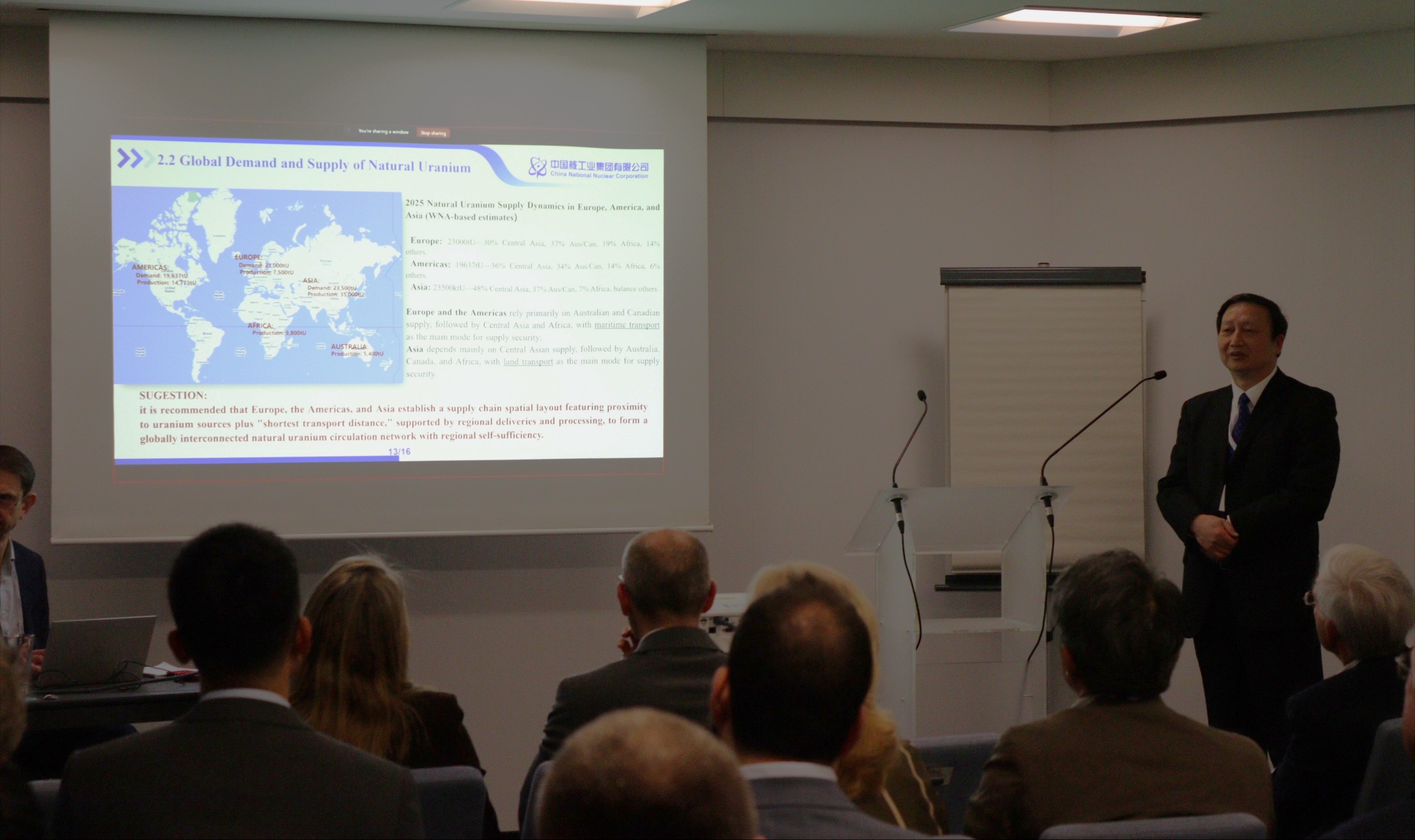
The session featured remarks from Dr Mingang Huang, Chief Economic Officer of CNNC, alongside updates from World Nuclear Association Director General Sama Bilbao y León and Head of Membership and Business Development Serge Gorlin.
Dr Huang outlined key geopolitical risks facing the fuel cycle, highlighting vulnerabilities linked to geographic concentration and transport dependency. He shared updates on the Alashankou bonded warehouse and presented CNNC’s proposal for a global uranium delivery network to strengthen supply chain resilience.
DG Bilbao y León updated members on recent new membership growth, notably from finance institutions and large energy users. This marks a significant shift, with major energy users currently seeking to secure their own 24/7 carbon-free energy supply, very actively looking at the opportunities nuclear electricity and heat provide. Members were invited to participate in a June workshop in Turkiye, co‑hosted with NIATR, bringing together industry and large energy users.
Members were also briefed on World Nuclear Association’s engagement with the finance community, including the Finance Nuclear Briefing Series and a preview of the Nuclear Investment Guide, to be published later this year.
Serge Gorlin closed with an update on emerging opportunities in India, following India Energy Week, where World Nuclear Association hosted the country’s first-ever “Nuclear Zone”. Recent policy and liability reforms have opened India’s nuclear industry to private and international investment. World Nuclear Association members were invited to attend a member-only webinar held on 28 April exploring Opportunities in India’s Expanding Nuclear Programme. Members were encouraged to look out for future webinars planned for 2026.
Preparing the next World Nuclear Fuel Report | Fuel Report Working Group and Sub-group Meetings
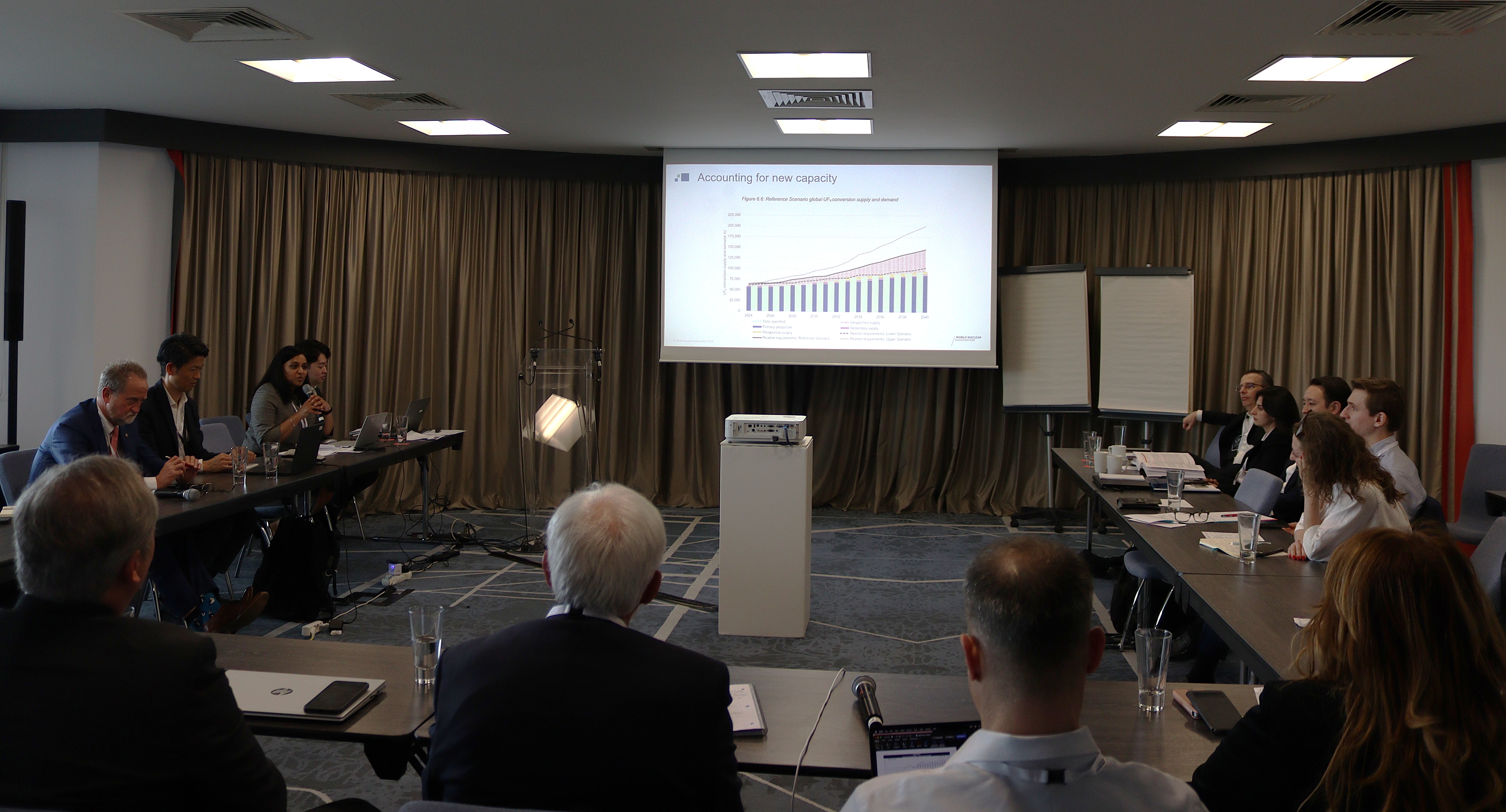
The World Nuclear Fuel Report is one of the Association’s flagship reports, published biennially, which presents global scenarios for demand and supply for fuel services. The report is prepared by the Association and its members. These members consist of utilities, mining companies, fuel cycle services companies as well as analysts and intermediaries who come together at Working Group meetings and online discussions over the course of ~18 months to discuss the key developments in nuclear power demand, and uranium and fuel services supply. The Working Group enable industry and other stakeholders on data collection, analysis of the results and preparation of the report.
The Fuel Report Working Group and all of its sub-groups (Demand, Uranium, Conversion, Enrichment, Fabrication and Secondary Supply) held meetings this April. More detailed discussions took place on the scope and parameters for the next World Nuclear Fuel Report to be published in 2027. Over 50 members participated in the discussions in person and online. Updates were shared from the Secretariat on the sustainability reporting initiatives from the ESG Working Group and the forthcoming Nuclear Investment Guide being developed by the ELF Working Group. Member presentations were made on Uranium by Kazatomprom and Conversion by ConverDyn. The SMR Taskforce of the Demand SG presented an approach to include demand modelling for non-LWR SMRs and the future demand for advanced nuclear fuel such LEU+ and HALEU
Please contact kaajal.desai@world-nuclear.org if you want to learn more or join the Fuel Report Working Group.
Rethinking used fuel management beyond 2040 | Used Fuel Management Working Group
The Used Fuel Management Working Group held its second 2026 meeting on 14 April in Monaco. Highlights included the election of Bas Suijs (ULC Energy) as the new Vice-Chair, a detailed briefing from Bas on the recent NEA Radioactive Waste Management Committee session, and a major presentation by Orano on the “Aval du Futur” programme, which is France’s strategic initiative to renew La Hague reprocessing and MOX fabrication facilities for long-term closed fuel-cycle operations through 2050 and beyond. The group also received a joint update from the IAEA on INPRO projects and collaborative backend approaches, reviewed progress on Action Plan 6 (new business avenues for used fuel management).
The Working Group is also driving exciting forward-looking study on potential on long term nuclear development, possible nuclear technology and fuel cycle scenarios, and explore front end and back end solutions. Together with the Fuel Report Working Group, it is developing an industrial vision on possible futures for nuclear fuel cycles beyond 2050, exploring how increased recycling of used fuel can reduce future natural uranium demand while supporting the global tripling of nuclear capacity. This analysis was successfully presented by Luc Van Den Durpel (Nuclear-21) at the World Nuclear Fuel Cycle Conference in the panel session “Closing the loop on sustainability”, generating strong interest from the audience. The results will complement the upcoming World Nuclear Fuel Report by extending the perspective far beyond 2050, and enabling the industry to properly account for the additional uranium inventory made available through recycling of used fuel.
This work is essential because it explore long term nuclear development and delivers practical industry-led solutions to backend constraints that could otherwise limit the global tripling of nuclear capacity. By feeding directly into IAEA, NEA and national programmes, the group helps ensure sustainable, cost-effective and publicly acceptable used fuel strategies that support new-build programmes worldwide.
Please contact sameh.melhem@world-nuclear.org if you want to learn more or join the Used Fuel Working Group.
Advancing decommissioning and waste management practices | Decommissioning Working Group
The Materials, Waste Management and Decommissioning Working Group combined a plenary session with focused expert discussions. By monitoring international and local trends and building consensus on more effective approaches, the group is developing a shared evidence base that can be promoted through technical papers and engagement with bodies such as the IAEA and NEA to support more predictable, resource-efficient decommissioning and waste management outcomes.
The plenary session featured updates from the International Organisation for Standardisation (ISO) on their development of an ISO standard on Decommissioning of Nuclear Power Plants (ISO ISO/NP 26445-1). International standards are increasingly shaping how decommissioning work is specified, procured and assessed across borders. Contributing to the development of ISO/NP 26445-1 and bringing practical operator and supply-chain experience into the process, Association members can help ensure international standard is workable, consistent with existing national requirements, and supports safe, efficient delivery rather than creating avoidable complexity.
The afternoon expert sessions continued their work on development of the report on advancing regulatory alignment for the nuclear back end. This work aims to support more consistent and efficient approaches to decommissioning and waste management across jurisdictions. The Working Group’s effort to advance regulatory alignment is highly impactful: differences in definitions, clearance criteria, waste classification and material routes can drive cost and limit opportunities for reuse and recycling.
Please contact allarakha.vora@world-nuclear.org if you want to learn more or join the Materials, Waste Management and Decommissioning Working Group.
Unlocking financing and new business models | Economics, Law and Finance (ELF) Working Group
The ELF Working Group brought together member organizations to tackle the critical economic, legal, and financial challenges shaping the future of nuclear energy. The meeting covered three interconnected themes:
1. System-level cost framework which, by going beyond LCOE metrics and including the full cost of building and maintaining the electric grid, reveals nuclear's true value in delivering resilient, decarbonized power systems and its essential role in providing low-cost electricity to customers. This conversation is part of Association ongoing activities to engage with policy makers on nuclear values within electricity system and industry position to improve electricity markets and cost and value metrics that will level the playing field for nuclear generation. The Working Group is actively looking for members interested in market and economic issues.
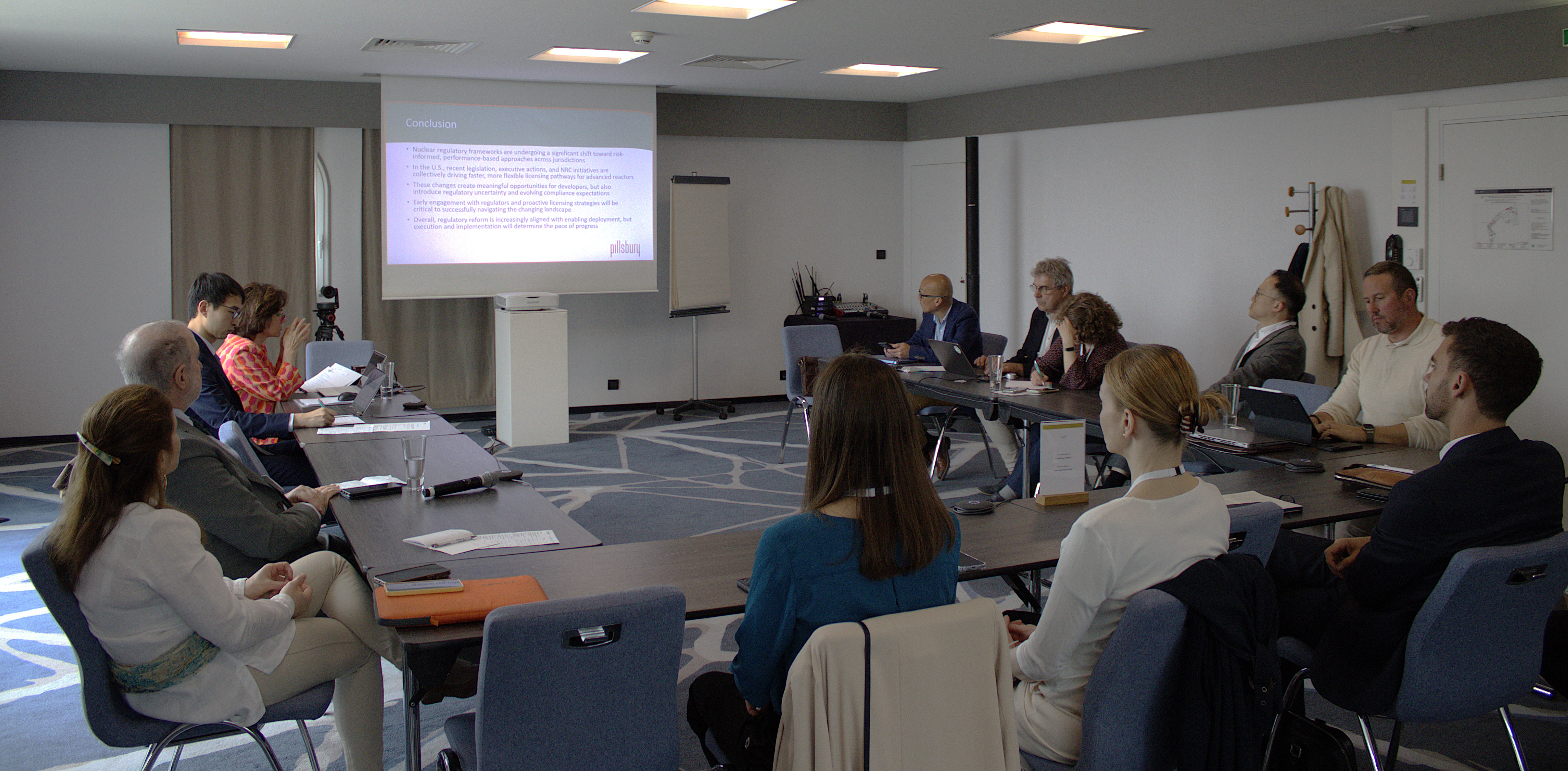
2. Landmark regulatory reforms in the US, Finland, and Sweden that are dramatically reducing licensing timelines and costs for new and advanced reactor projects. Members are keen to understand the changing nuclear legal and regulatory environment and the implications that national changes are having on the industry as a whole.
3. New initiatives aiming at connecting finance and nuclear industry to facilitate nuclear financing: the Association’s Nuclear Investment Guide, which it is being developed with members and representatives of the financial community; and EDF's Finance and Investing in Nuclear Advisory Board (FINABe). Both initiatives are designed to bridge industry expertise with the private and public capital needed to fund global nuclear expansion. Financing has become a key priority for the Association and all members interested in this set of topics are encouraged to engage in this Working Group.
Please contact lola.infante@world-nuclear.org if you want to learn more or join the Economics, Law and Finance Working Group.
Enhancing industry communications capability | Communications Working Group
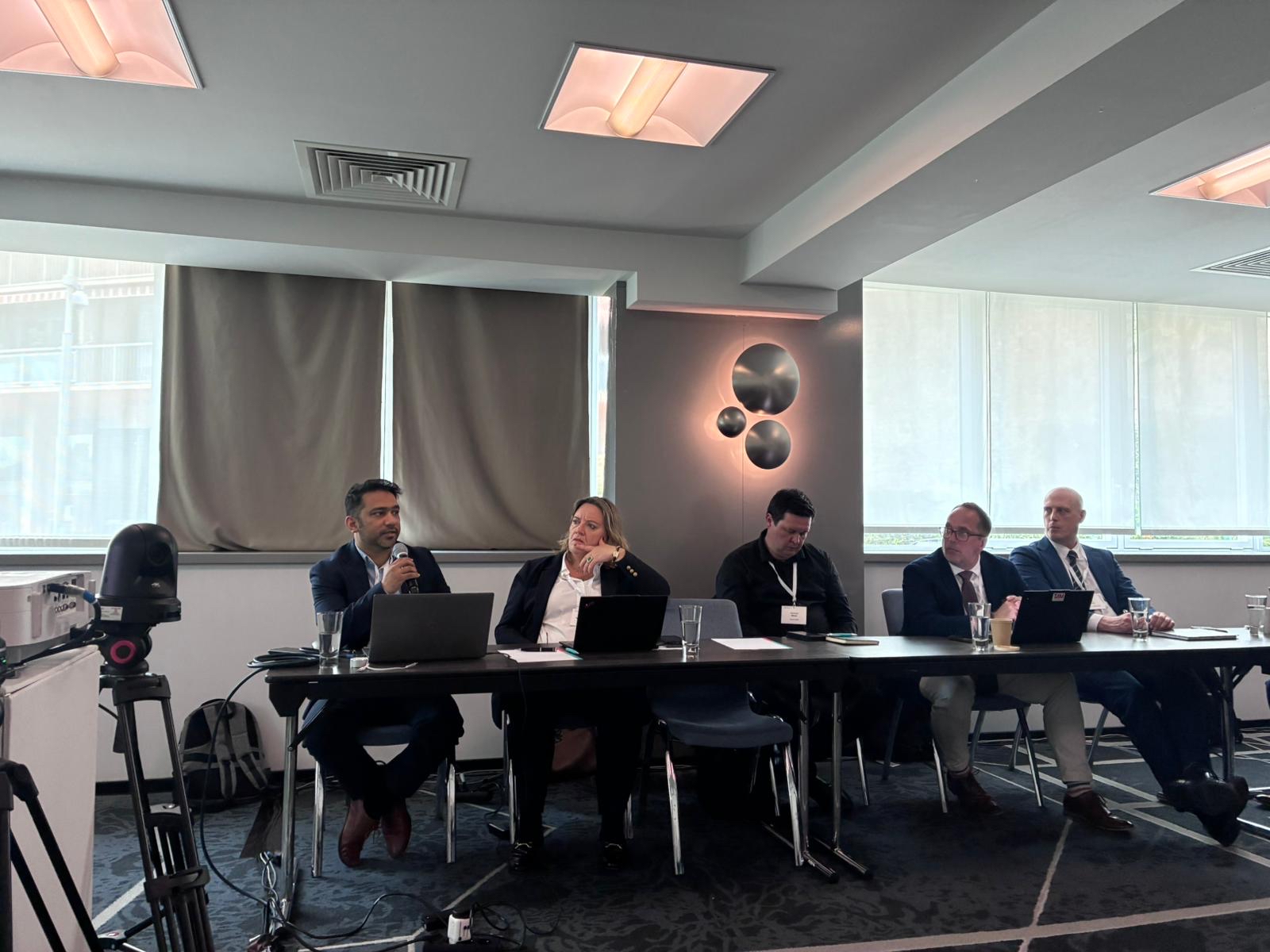
We face unique challenges as communications professionals working in a truly global industry, and the Communications Working group provides a collaborative environment for communications professionals to share best practice and lessons learnt across the civil nuclear energy industry. Discussions in April ranged from crisis communications to C-suite brand management to managing the media in the new nuclear landscape where public discourse is interested rather than averse.
Akitsuka Kobayashi, TEPCO, presented their reflections on 15 Years of Corporate Communication since the Fukushima Daiichi Accident with the very interesting challenge that they are facing increasing numbers of people who are not aware of this accident – either because of their age or because it has faded from people’s memories. Their communications are therefore moving into a raising awareness phase with specific YouTube campaigns aimed at attracting future workforce, and a recent TV broadcast arranged on the 15th anniversary to use the national attention the day attracts to share the message of future decommissioning efforts that are needed.
From outside the nuclear industry Christina Minshull shared insights about the importance of building C-suite brands to give your organisation a leadership advantage in an ever-changing digital landscape.
Finally, we heard from Rafael Marín, Westinghouse Electric Company, about a recent invitation to the global press to tour the AP1000 Training Academy. Members in the meeting heard about the considerations and precautions taken, and then the benefit gained with 100% positive press coverage.
Please contact lucy.oconnor@world-nuclear.org if you want to learn more or join the Communications Working Group.
Strengthening nuclear transport and logistics | Transport Working Group
The Transport Working Group provides members with a forum to share operational insight and stay ahead of fast-moving developments that can affect the timely, safe and secure movement of nuclear and radioactive materials worldwide. Recent discussions focused on how geopolitical disruption in key corridors can impact routing, costs and scheduling, and how organisations are adapting to maintain resilience.
Updates were provided on engagement with international partners, including the World Nuclear Transport Institute and Nuclear Energy Institute, and the group reviewed the evolving international policy environment. This included discussions around EU sanctions and other trade restrictions, and what they could mean for contracting, compliance checks and transport planning. By comparing approaches across jurisdictions and modes, members are building a shared understanding of emerging requirements and practical mitigations.
Members also received an update on the Association’s contribution at the IAEA International Conference on the Safe and Secure Transport of Nuclear and Radioactive Materials (Vienna, 23–27 March 2026). The Association highlighted the value of industry collaboration in strengthening transport safety, security and regulatory implementation. Representing industry, the Association brought attention to persistent challenges such as denial of shipments and the need for consistent application of international requirements. More information is available on our website: World Nuclear Association Highlights Industry Collaboration at IAEA Transport Conference - World Nuclear Association
Looking ahead, members began preliminary discussions on a proposed Working Group concept paper on the status and outlook for nuclear material transport, including the emerging topic of transportable nuclear power plants. The aim is to set out a clear, fact-based view of operational and policy trends, identify where inconsistent requirements or practical barriers could constrain deployment, and provide a shared platform for engagement with international bodies and partner organisations. This work will help ensure that transport and logistics considerations are addressed as new technologies and new-build programmes scale up.
Please contact allarakha.vora@world-nuclear.org if you want to learn more or join the Transport Working Group.
Strengthening sustainability and ESG alignment | ESG Working Group
The ESG Working Group has been advancing the project of updating the sustainability assessment tool for fuel cycle suppliers, previously called "Uranium Mining Sustainability Checklist". The assessment framework will enable utilities and other fuel procurers to integrate it into their supplier management process to assess supplier sustainability performance. A dedicated taskforce from ESG Working Group members has been established to ensure the sustainability assessment captures material topics while remaining concise and practical for nuclear fuel sector. The project is finishing its scope-defining stage and entering the delivery phase, with final publication expected by the end of 2026.
The ESG Working Group has been engaging with ISSB on the development of International Financial Reporting Standards (IFRS) S1 & S2 Standards, the global baseline for climate and sustainability-related financial disclosures which are being adopted by multiple jurisdictions. Together with colleague from IFRS group, the ESG Working Group discussed their recent proposed amendments to the Sustainability Accounting Standards Board (SASB) Electric Utility sector standard. The ESG Working Group will develop a comment letter to the exposure draft by 24th July to ensure that nuclear is appropriately represented in the revised standard.
The ESG Working Group heard a presentation from Polina Lion, Chief Sustainability Officer, Rosatom, on recent updates on nuclear energy's role in global climate policies, including NDCs, green taxonomies, carbon markets and green certification systems. Promoting those frameworks to include nuclear is essential for unlocking green finance and policy opportunities for the nuclear industry. Based on the previous engagement with the EU Taxonomy, the ESG Working Group will continue influencing the frameworks together with member companies from relevant jurisdictions, and other relevant international organizations.
ESG Working Group also held a panel discussion on implications of recent EU policy developments (the “Omnibus”) on the nuclear industry. Panellists noted that while the Omnibus package has introduced disruptions, these have generally been managed effectively. Moving forward, the Working Group agreed to enhance dialogue and data exchange across the nuclear value chain to better respond to regulatory requirements, particularly the forthcoming EU due diligence directive.
Please contact qi.zhao@world-nuclear.org if you want to learn more or join the ESG Working Group.
Our Next Virtual Working Group meetings
The following Working Groups will take place in May online:
- Cooperation in Reactor Design Evaluation and Licensing (CORDEL) Working Group
- Supply Chain & Long-Term Operation Working Group
- Security Working Group
- International Safety Assurance for Nuclear Fuel Cycle Facilities (INSAF) Working Group
Our Next In-Person Working Group meetings
Our next in person Working Groups will be on the 7 - 9 September in London ahead of World Nuclear Symposium. These meetings will build on the outcomes from our April and May Working Groups, advancing active projects and refining draft deliverables. Members who wish to contribute their expertise and shape ongoing work are encouraged to join the relevant Working Groups. To find out how to get involved, please contact members@world-nuclear.org.